Key Takeaways
| Question | Short Answer |
|---|---|
| What’s the realistic MOQ for logo printing? | 50–200 pcs for stock models, 2,000+ for custom colors |
| Which material lasts longest? | 304 or 316 stainless steel with vacuum insulation |
| What’s the cheapest per-unit option? | BPA-free Tritan plastic, around $2–$4 |
| How long does production take? | 4–6 weeks for standard designs, longer for full OEM |
| What decoration method is most durable? | Laser engraving on stainless steel — dishwasher safe |
What MOQ Should I Actually Expect for Wholesale Personalized Water Bottles?
So the first thing every buyer asks is, what’s the minimum? And honestly, the answer depends on how deep your customization goes. A quick logo print on a stock bottle? Some factories start at 50 pieces. Want a custom color that isn’t in their catalog? That usually jumps to 1,000–2,000 units per color. Full new mold development? 10,000 pieces minimum, no way around it.
Here’s what most first-time buyers don’t realize — MOQ isn’t one number, it’s a ladder. Each rung up the customization ladder adds cost and commitment. I’ve seen buyers get excited about a $3.20 quote only to find out that price assumed 10,000 units in a single color. At 200 units, the same bottle cost them $5.80.

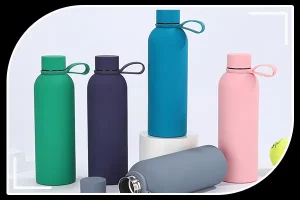
Some factories like Mountop Water Bottle offer flexible MOQ based on your project scope. That’s a big deal for small brands testing the market. You don’t need to gamble $20,000 on your first order. Start with 100–200 units of a custom sublimation tumbler to test demand, then scale up once you know what sells.
Does a lower MOQ mean higher per-unit cost? Yeah, pretty much always. But here’s the thing — paying $6 per bottle at 100 units beats paying $3.50 at 5,000 units if you can’t sell 5,000 bottles. Cash flow matters more than unit economics when you’re starting out.
A quick tip from experience: Ask the factory if they have “ready-to-ship” stock models that accept logo customization at lower quantities. Mountop, for example, offers logo engraving on existing bottle styles starting from just 50 pieces. This is the fastest and cheapest way to get your brand on a quality bottle without committing to thousands of units.
Also worth noting — MOQ applies per design per color. If you want three different colors with the same logo, you’re looking at 3× the minimum. Some factories combine colors under one MOQ, but most don’t. Always clarify this before you budget anything.
Tritan, Stainless Steel, or Aluminum — Which Material Fits Your Order?
Picking the material is probably the single biggest decision you’ll make. It affects cost, durability, decoration options, and how your customers actually use the bottle. Let me break it down without the fluff.
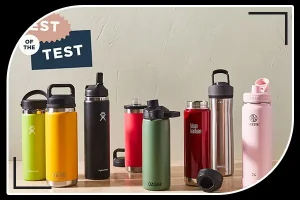
Tritan plastic sits at the budget end. It’s BPA-free, shatter-resistant, and stain-resistant. The material works great for trade shows and large giveaways where you need 500+ bottles without breaking the bank. Silk screen printing and full-color digital wraps both work well on Tritan surfaces. What doesn’t work? Laser engraving — the laser would punch straight through.
Stainless steel costs more but performs better. Double-wall vacuum insulation keeps drinks cold for up to 24 hours and hot for up to 12. 304 grade is the industry standard for food safety. 316 grade adds molybdenum for better corrosion resistance — worth the upgrade if your customers use the bottles with acidic drinks like orange juice or coffee. Laser engraving on stainless steel produces the most durable logo finish available, and it’s the only method that’s fully dishwasher safe.
Aluminum sits in the middle. Lightweight, decent durability, but requires an internal liner because raw aluminum reacts with liquids. Not the best choice for hot drinks.

Here’s a comparison table that might help:
| Feature | Tritan Plastic | Aluminum | 304 Stainless Steel |
|---|---|---|---|
| Weight | 3–6 oz | 5–10 oz | 10–16 oz |
| Cold retention | None | Minimal | Up to 24 hrs |
| Laser engraving | No | Yes | Yes |
| Per-unit cost | Lowest | Mid | Mid–premium |
| Best for | Events, giveaways | Eco campaigns | Corporate gifts |
For a reusable stainless steel water bottle with straw, expect to pay $4.50–$7.80 per unit at 50-piece quantities. The same bottle in Tritan drops to around $2.14–$4.28. That gap matters at scale, but stainless steel bottles get kept and used way longer than plastic ones. People actually hold onto them.
How Does the Customization Process Work From Art File to Finished Bottle?
Okay so you’ve picked your bottle and your material. Now what? The customization process has a few distinct stages, and skipping any one of them tends to cause problems later.
Step 1 — Artwork and placement. You send your logo in AI, PDF, or high-res PNG format. The factory reviews it for print resolution, color separation, and placement feasibility. A good factory will flag issues before production — like a thin script font that won’t reproduce clearly on a curved bottle surface.
Step 2 — Sampling. This is where you catch problems. I know a buyer who approved a sample in 20 minutes because they were in a rush. The production run arrived with the logo 8mm too low and the wrong Pantone shade. Ten extra minutes on the sample would have saved three weeks of rework.
Step 3 — Production and QC. Factories with automated lines produce faster and more consistently. Ask about their inspection process. Mountop, for example, runs over 50 quality inspectors who check each shipment against international standards.

Logo methods break down like this:
- Silk screen printing — cheapest, works on plastic and metal, but each ink color costs extra
- Laser engraving — permanent, dishwasher safe, works only on metal
- Heat transfer — full-color capability, good for detailed artwork
- UV printing — vibrant colors, works on curved surfaces
- Sublimation — best for full-wrap designs, premium cost
For a one-touch open 316 stainless steel insulated water bottle, laser engraving is the obvious pick. Clean, permanent, and it won’t fade after a hundred dishwasher cycles. For plastic bottles heading to a trade show, silk screen printing keeps costs down without sacrificing looks.
Expert advice: Always ask for pre-production samples from the actual production line, not a hand-made prototype. The prototype will always look better than the real run. What you need to see is what the real run will look like.
Where Do Buyers Get It Wrong With Bulk Water Bottle Orders?
I’ve watched enough orders go sideways to spot the patterns. Most problems don’t come from manufacturing — they come from decisions made before production even starts.
Mistake 1: Chasing the lowest quote. When one factory quotes 40% less than another for the same specs, something got cut. Usually it’s steel grade — 201 instead of 304. Or missing certification. Or thinner walls. The bottle looks the same in photos. It doesn’t perform the same after six months of daily use.
Mistake 2: Rushing the sample. Already mentioned, but it deserves repeating. Check the finish, logo size, print position, lid mechanism, and packaging. Every detail. The sample exists specifically so you can catch expensive mistakes early.
Mistake 3: Ignoring packaging. Your customer sees the box before they see the bottle. Standard brown carton costs almost nothing. Custom FSC gift boxes add 8–10% to unit cost. Is that worth it? For corporate gifts, absolutely. For gym giveaway bottles, probably not.
Mistake 4: Not asking about certifications. FDA, LFGB, and REACH compliance aren’t optional if you’re selling in regulated markets. Mountop’s stainless steel bottles carry all three. If your supplier can’t provide certification documents, walk away.
Mistake 5: Not planning for the second order. The best manufacturing relationships aren’t built on one shipment. They’re built on repeat orders with consistent quality. Brands that grow fastest pick a partner they can scale with, not just the cheapest option for a single run.
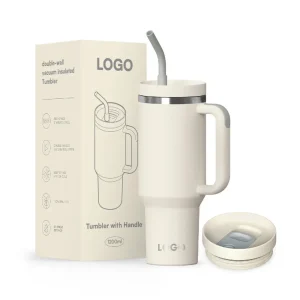
A 40oz tumbler with handle is a great example. First order might be 200 units for a launch. But if the product sells, you’ll want 2,000 units six months later. Will your factory hold the same quality at scale? Ask that question before you place order one.
One more thing — always retain unopened samples for at least 90 days. If quality disputes come up, you’ll need reference pieces to compare against.
Can Personalized Bottles Actually Support Smart Features Without Blowing the Budget?
Yeah, this is the part where personalized bottles get interesting. The market has moved way past “print a logo on a plain bottle.” Smart features now exist at wholesale-friendly price points, and they differentiate your brand in ways a basic print job just can’t.
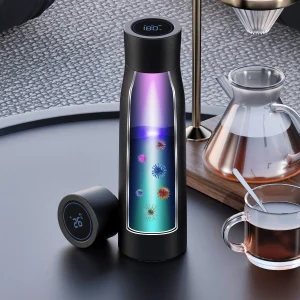
Take a UV water bottle with self-cleaning UVC sterilization. It kills bacteria in the water using a built-in UV light. For outdoor brands, travel companies, or health-focused labels, that feature alone justifies a premium retail price. Your customers aren’t just buying a bottle — they’re buying water safety.
Then there’s the smart water bottle with app UV self-cleaning temperature display drink reminder. It connects to a phone, tracks hydration, shows real-time temperature, and self-cleans. This sits in the premium tier for sure, but the margins work if you’re selling direct-to-consumer or through specialty retail.
Temperature display bottles are another category worth watching. A smart display temperature bottle shows the liquid temperature on a small LED screen built into the lid. Parents love these for kids’ bottles — no more burned tongues. Corporate buyers like them for coffee tumblers.
| Smart Feature | Typical Wholesale Add-On Cost | Best Use Case |
|---|---|---|
| Temperature display lid | $1–$2 per unit | Coffee tumblers, kids’ bottles |
| UV self-cleaning | $3–$5 per unit | Outdoor, travel, health brands |
| Bluetooth speaker | $4–$7 per unit | Lifestyle, Gen Z marketing |
| App connectivity | $5–$8 per unit | DTC brands, premium gifting |
Does adding smart features complicate your order? Slightly. Expect longer sampling timelines and stricter QC. But the production process isn’t fundamentally different. The factory still assembles the bottle the same way — they just install a different lid.
For a magnetic water bottle, the smart feature is simpler. A magnetic lid that snaps onto gym equipment or car mounts. Low cost, high perceived value. These things get shared on social media because they look different.
My honest take? Start with one smart feature on a mid-range bottle. Don’t try to build the Swiss Army knife of water bottles on your first order. One feature, done well, beats five features done poorly.
What Does the Real Cost Breakdown Look Like for a Wholesale Bottle Order?
Alright, let’s talk money. The per-unit price you see on a quote is not the whole story. Every custom bottle quote contains nine cost components, and understanding them lets you compare quotes that look identical but aren’t.
Here’s the breakdown for a typical stainless steel insulated bottle:
| Cost Component | % of Unit Price | What Drives It |
|---|---|---|
| Raw material (steel body) | 30–45% | Grade, wall thickness |
| Lid, seal, accessories | 8–15% | Complexity of mechanism |
| Surface finish / coating | 5–20% | Basic brushed vs multi-process |
| Logo customization | 2–8% | Method: engraving vs sublimation |
| Tooling (first order only) | 0–15% | Zero for stock, high for new mold |
| Certification testing | 1–5% | FDA, LFGB, Prop 65 |
| Packaging | 3–10% | Standard carton vs custom box |
| Factory overhead & margin | 10–18% | QC systems, R&D, compliance |
| Freight (factory to port) | 2–5% | Domestic trucking, docs |
The raw material is the biggest variable. 304 stainless steel costs more than 201 grade because it contains 18% chromium and 8% nickel. That higher nickel content is what makes it food-safe and corrosion-resistant. When a factory quotes you a suspiciously low price, check the steel grade first.
Volume discounts kick in at different thresholds depending on the supplier. Some offer price breaks at 500 units, others at 1,000 or 5,000. Ask upfront — sometimes splitting your order into two shipments hits a discount tier you didn’t know existed.

For a 32 oz water bottle with dual drinking lid and vacuum insulation, expect wholesale pricing in the $5–$8 range at 500+ units. That same bottle retails for $25–$35, so the margin holds up. For a small mouth water bottle — simpler design, fewer components — wholesale drops to $3–$5.
Hidden costs that surprise first-time buyers:
- Color matching fees — $200–$500 if you need a non-standard Pantone
- Setup charges — screen printing screens cost $50–$100 each per color
- Sample fees — usually refunded on the production order, but not always
- Rush production — adds 15–25% to unit price
One thing I’ve learned: never sign off on a quote without asking what’s NOT included. Freight, export documentation, and certification costs sometimes sit outside the quoted price. Get everything in writing before you wire a deposit.
How Do You Pick a Manufacturer You Won’t Regret Working With?
Choosing a factory is a relationship decision as much as a financial one. I’ve seen buyers save 30 cents per unit and lose a whole product launch because the supplier disappeared after the deposit cleared.
Here’s what actually matters:
Response time. A factory that replies within 5 hours is actively managing orders. One that takes 3 days to answer a simple question will take 3 weeks to fix a production problem.
On-time delivery rate. Ask for their historical numbers. Anything below 90% should raise concerns. Top suppliers maintain 100% on-time delivery records.
Sample quality. Order samples from 2–3 factories before committing. Compare stitch quality on seams, lid threading smoothness, and print sharpness. The factory that invests in sample quality usually invests in production quality too.
Certification transparency. Can they provide FDA, LFGB, or REACH certificates on request? Do they have documentation ready, or do they scramble to find it? Mountop holds all three certifications for its stainless steel bottles.
Communication style. Good manufacturers encourage questions. If your contact person seems annoyed by detailed spec questions, that’s a red flag. The factories with the smoothest projects are the ones where communication flows freely from day one.

For a stainless steel filter water bottle with built-in carbon filtration, you’ll want a factory that understands filter housing tolerances. Not every bottle manufacturer has experience with that level of precision. Ask specifically about their experience with your product category.
Expert tip: Request a video call tour of the production floor before placing your first order. It takes 15 minutes. You’ll learn more from seeing the actual factory than from any catalog or brochure. You can spot outdated equipment, disorganized workstations, and whether they actually have the automated lines they claim.
Also — negotiate payment terms. Standard is 30% deposit, 70% before shipping. Some factories will accept 30/40/30 if you’ve built a relationship. Always use a payment method with dispute protection for the first few orders. Alibaba Trade Assurance exists for exactly this reason.
One last thing. Don’t pick a factory based on one product. Pick one that can grow with your brand. If you start with insulated sports water bottles and later want to add coffee tumblers, kids’ bottles, or smart bottles, your manufacturer should be able to handle all of those. Switching factories mid-growth costs time, money, and quality consistency.
Frequently Asked Questions
Q: What’s the minimum order for wholesale personalized water bottles?
A: For logo printing on stock models, 50–200 pieces is common. Custom colors start at 1,000–2,000 per color. Full new mold development requires 10,000+ units.
Q: How long does production take?
A: Standard designs with logo printing take 4–6 weeks. Full OEM development can take 8–12 weeks including sampling and tooling.
Q: What’s the cheapest way to personalize bottles?
A: Silk screen printing on Tritan plastic bottles. Simple one-color designs on stock models offer the lowest per-unit cost.
Q: Can I mix colors in one order to meet MOQ?
A: Some factories allow it, most don’t. Always confirm before ordering. Mixed-color orders often trigger separate MOQ requirements per color.
Q: What logo method lasts the longest?
A: Laser engraving on stainless steel. It’s permanent, dishwasher-safe, and won’t fade or peel.
Q: Do I need certifications to sell water bottles?
A: Yes, for most regulated markets. FDA for the US, LFGB for Germany, REACH for EU. Ask your supplier for test reports before production.
Q: Can I get a sample before placing a bulk order?
A: Always. Reputable factories provide pre-production samples. Expect to pay a sample fee, but many refund it on the production order.
Q: What’s the typical lead time from sample approval to delivery?
A: Production takes 4–6 weeks after sample approval. Add 2–4 weeks for ocean freight depending on destination.