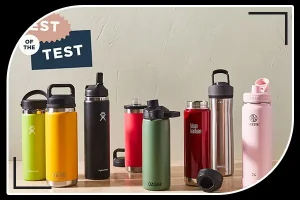
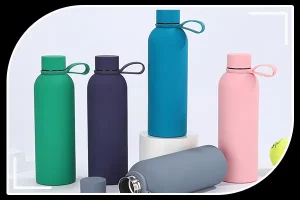
A vacuum flask, also called a thermos or insulated water bottle, is a specially designed container that keeps your drinks hot or cold for long periods. It works by minimizing heat transfer between the inside and outside of the bottle. Today, vacuum flasks are widely used in homes, offices, and outdoor activities — and are essential products for both consumers and brands in the drinkware market.
How Does a Vacuum Flask Work?
The working principle of a vacuum flask is based on thermal insulation.
It has two layers — an inner wall and an outer wall — separated by a vacuum layer. This vacuum space reduces heat transfer in three ways:
- Conduction: The vacuum prevents direct heat transfer between the walls.
- Convection: No air in the vacuum means no medium for convection.
- Radiation: Reflective coatings, such as copper, reduce radiant heat loss.
As a result, beverages can stay hot for 12–24 hours or cold for up to 48 hours, depending on the design and material.

Main Parts of a Vacuum Flask
| Part | Function |
|---|---|
| Inner Bottle | Usually made from 304 or 316 stainless steel for durability and safety. |
| Vacuum Layer | The key insulation area that minimizes heat transfer. |
| Outer Shell | Provides strength and protection; often colored or powder-coated. |
| Lid/Cap | Ensures airtight seal and leak prevention. Some lids include a cup or digital display. |
| Base | Anti-slip or reinforced bottom for stability. |
Materials Used in Vacuum Flasks
Vacuum flasks are commonly made from stainless steel, although some models also use glass or plastic liners. Among stainless steel types, 201, 304, and 316 grades are most widely used.
201 Stainless Steel
Advantages:
- Affordable and lightweight
- Suitable for general use or promotional products
Disadvantages:
- Lower corrosion resistance
- Not ideal for acidic or salty drinks
304 Stainless Steel
Advantages:
- Excellent corrosion resistance and durability
- Safe for food and beverage contact
- Maintains insulation performance over time
Disadvantages:
- Slightly higher cost than 201 stainless steel
Use: Most mid-range stainless steel vacuum flasks are made with 304 steel.
316 Stainless Steel
Advantages:
- Premium “marine-grade” steel with molybdenum
- High resistance to acids, salts, and corrosion
- Ideal for high-end smart bottles and professional-grade insulated flasks
Disadvantages:
- Higher cost
- Mostly used for luxury or advanced products
A Brief History of the Vacuum Flask
The vacuum flask was invented in 1892 by Sir James Dewar, a Scottish scientist, to store liquid gases at low temperatures. His design, the Dewar flask, had double glass walls with a vacuum between them to prevent heat transfer.
In 1904, the German company Thermos GmbH commercialized the design for everyday use. “Thermos” soon became a generic term for vacuum flasks.
Over the years, vacuum flasks evolved from fragile glass containers to durable stainless steel bottles, and now into smart insulated bottles with features like temperature displays, UV sterilization, and hydration reminders — combining science with lifestyle innovation.
The Working Principle of a Vacuum Flask
A vacuum flask prevents heat transfer in three main ways:
- Conduction: The vacuum blocks heat flow between the inner and outer walls.
- Convection: No air in the vacuum layer prevents convection currents.
- Radiation: Reflective inner coatings reduce radiant heat loss.
Advanced flasks also include insulated lids and silicone gaskets to further minimize heat escape, maintaining beverage temperature for hours.
How a Vacuum Flask Is Manufactured
The production of a stainless steel vacuum flask involves multiple precise steps:
- Material Preparation: High-quality stainless steel (201, 304, or 316) sheets are selected and cut.
- Deep Drawing and Shaping: Steel sheets are pressed into the shape of inner and outer shells.
- Welding and Assembly: Inner and outer shells are welded, leaving a gap for the vacuum.
- Vacuum Creation: Air is extracted using vacuum pumps; optional copper coating improves thermal performance.
- Surface Treatment: Bottles are polished, brushed, powder-coated, or coated with rubber/plastic.
- Inspection and Testing: Quality checks for heat retention, leak-proofing, and surface durability.
- Logo Printing and Packaging: Customization with laser engraving, color, and packaging options.
As a professional OEM/ODM water bottle manufacturer, we provide full support for custom designs, logos, and packaging.
Benefits of Using a Vacuum Flask
- Keeps drinks hot or cold for hours
- Durable and eco-friendly
- Safe and hygienic (BPA-free, food-grade materials)
- Portable and stylish
- Perfect for corporate gifts and promotions
Types of Vacuum Flasks
- Stainless Steel Vacuum Flasks – Durable and corrosion-resistant
- Glass-Lined Flasks – Excellent insulation, fragile
- Plastic Insulated Bottles – Lightweight, lower insulation
- Smart Vacuum Flasks – Temperature display, UV sterilization, hydration reminders
Our UV smart water bottles combine stainless steel durability with UVC sterilization, temperature display, and hydration reminders for modern lifestyles.
How to Choose a High-Quality Vacuum Flask
When selecting a supplier or manufacturer:
- Material: 316 stainless steel is preferred for premium models
- Insulation Performance: Check retention time for hot/cold liquids
- Lid Seal Quality: Leak-proof silicone gaskets
- Certifications: FDA, CE, ROHS, BPA Free
- Factory Capability: OEM/ODM experience, custom logo and packaging support
Common Uses of Vacuum Flasks
- Travel & outdoor activities
- Office & daily hydration
- Gym & sports drinks
- Corporate gifts & promotional items
Vacuum Flask vs Normal Water Bottle
| Feature | Vacuum Flask | Normal Bottle |
|---|---|---|
| Insulation | Excellent | None |
| Material | Stainless steel/glass | Plastic or single-wall steel |
| Durability | Long-lasting | Can deform over time |
| Eco-Friendliness | Reusable, sustainable | Often disposable |
| Price | Higher, long-term value | Lower upfront cost |
Why Choose Mountop as Your Vacuum Flask Supplier
Mountop is a leading stainless steel water bottle and vacuum flask manufacturer established in 2008.
We provide:
- ISO9001 certified production
- Full OEM/ODM customization
- Free laser logo service
- Custom colors, packaging, and branding
- Premium 316 stainless steel options
- Products compliant with FDA, CE, ROHS, FCC, BPA Free standards
With over 15 years of experience, Mountop combines innovation, quality, and customization to deliver premium insulated bottles and smart drinkware to global distributors and brands.