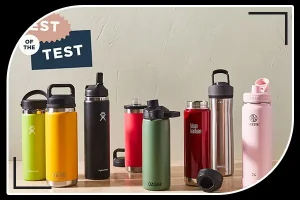
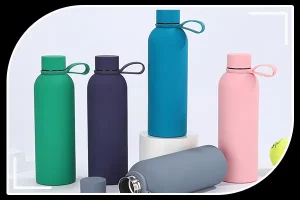
For procurement managers, retail buyers, and brand owners sourcing at scale, custom water bottles wholesale purchasing offers something stock products simply cannot: a product that carries your brand identity from the first sip. But getting it right — right materials, right printing, right order process — takes more than picking a design and sending it to a factory. This guide walks you through everything that matters.

Why Custom Bottles Are More Than a Product
A custom water bottle is one of the few promotional or retail items people use daily, publicly, and repeatedly. Studies suggest a reusable bottle can generate over 1,400 brand impressions over its lifetime, far outpacing most branded merchandise.
For B2B buyers, this has real implications:
- Corporate gifting: A custom bottle that is made well shows quality and care. More than a branded pen or a notebook.
- Employee wellness programs: Companies that give out bottles as part of wellness programs help create a brand culture while also cutting down on single-use plastic waste.
- Retail and e-commerce: Branded bottles that have an unique design can stand out by offering value not just by being cheap.
- Sports and outdoor markets: In these areas practical features like leak-proof lids, wide-mouth openings and insulation are really important. Design alone won’t close the sale.
The common thread: When buying in amounts, customization is a business choice, not just a style choice.
Choosing the Right Material
Material affects everything downstream: price, MOQ, printing method, and market fit. The table below summarizes the most common options for wholesale buyers:
| Material | Key Strength | Best For |
|---|---|---|
| 304 Stainless Steel (18/8) | Food-safe, durable, odor-free | Corporate gifts, employee wellness |
| 316 Stainless Steel | Superior corrosion resistance | Outdoor, coastal, premium brand |
| BPA-Free Tritan Plastic | Lightweight, transparent, low cost | Sports, promotions, retail |
| Borosilicate Glass | Premium look, taste-neutral | Wellness brands, boutique retail |
| Aluminum | Lightweight, budget-friendly | Events, high-volume campaigns |
Regarding stainless steel grades: In wholesale procurement, grade 304 (also known as 18/8) is used by reliable manufacturers for food-grade products. However, less reputable sellers opt for cheap, low-grade steel containing little nickel that will eventually corrode. It is always advisable to inquire about the steel grade before making a purchase.
For businesses looking to buy custom water bottles in bulk, 304 stainless steel double wall vacuum insulation is the best balance of quality, price, and buyer expectation.
Understanding Printing and Decoration Methods
How your design goes onto the bottle is just as important as the design itself. Different methods suit different artwork, bottle surfaces, and order sizes.
| Method | Best For | Color Range | Durability |
|---|---|---|---|
| Laser Engraving | Metal bottles, logos | Single tone (etched) | Excellent |
| UV Printing | Full-color artwork, photos | Full color | Very Good |
| Screen Printing | Large solid-color areas | Up to 4 colors | Good |
| Heat Transfer Printing | All-over prints, gradients | Full color | Moderate |
Laser engraving remains the choice for corporate and premium retail buyers because it produces a permanent high-end result with no ink to chip or peel. UV printing is gaining popularity rapidly within the wholesale industry since it can cope with photo-type artwork and gradient finishes at a reasonable price. Screen printing continues to be the preferred option for simple logos in large quantities.
When your design features fine lines, gradients, or several colors, make sure to request a printed sample or a digital proof from your supplier before committing to full production.
How to Navigate the Ordering Process

For first-time wholesale buyers, the process from inquiry to delivery has several checkpoints worth understanding.
Step 1 — Define your specs. Settle on material, capacity, lid style, and decoration method before reaching out. Vague inquiries lead to vague quotes.
Step 2 — Request samples. Reputable suppliers offer pre-production samples (paid, usually credited against the final order). Never skip this step for large orders.
Step 3 — Confirm compliance documentation. For most markets, you will need evidence of FDA compliance (US), LFGB certification (EU), and ISO 9001 manufacturing standards. These should be backed by third-party lab test reports, not just factory claims.
Step 4 — Agree on timeline. Standard lead times for custom production run 25–45 days after artwork approval. Factor in shipping when planning seasonal campaigns.
Step 5 — Clarify MOQs. Stock items typically carry lower MOQs (100–500 pcs). For full OEM/ODM orders, where you are developing a unique mold or lid design, generally require more pieces and longer lead times.

Final Thought
Custom water bottles wholesale is a well-established category with real room for brand differentiation. If you approach it with the right specs, the right supplier questions, and a clear sense of your end market. The buyers who get the best results are the ones who treat the sourcing process as seriously as the design itself.