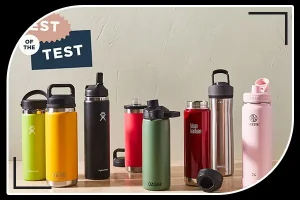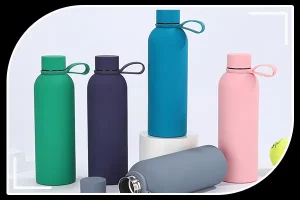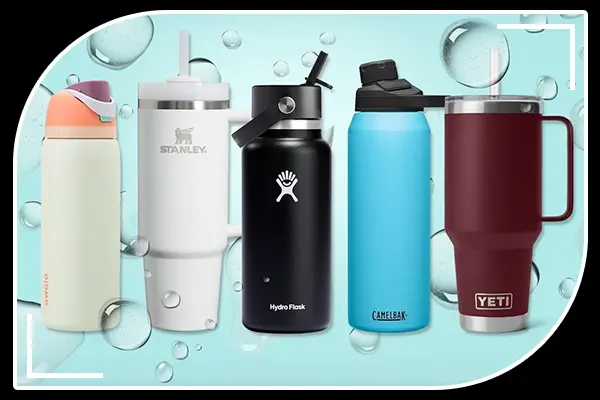
Custom reusable water bottles offer a chance for companies to market their brands by providing an efficient product to consumers, employees, or participants of events. But selecting the right bottle is only part of the process by the B2B buyer. The manufacturer also plays an important role.
If you are looking for promotional bottles, company gifts, sports bottles, or private-brand bottles, this article will explains how to select the right material, bottle type, customization, and manufacturer.

Why Custom Reusable Water Bottles for Your Business?
Reusable bottles provide for both branding and daily use. A company logo or custom design will stay with the recipient after the event or promotion. The bottles will serve as useful promotional products.
Also, they can contribute to a company’s sustainability program by offering an alternative to single-use bottles. However, businesses needs to select products besed on actually suitable for its particular purposes and not use sustainability as the only consideration for decision-making.
For example, an insulated stainless steel bottle could suit well for business gifts, while a light plastic one would work better at sports events and large promotions.
Choosing the Right Material for Your Bottle
Durable and Insulated Stainless Steel
Stainless steel bottles is a popular choice for durable, premium reusable bottles. Double-wall vacuum insulation help in keeping the drink cold or warm for longer periods.
These bottles are appropriate in cases of giveaways, outdoor products, corporate gifts, employee programs, and retail products. Laser engraving on stainless steel helps in giving permanent branding.
When comparing stainless steel bottles, consider the steel grade, insulation construction, weight, lid design, and leak resistance instead of looking only at the exterior finish.
Lightweight and Versatile BPA-Free Plastic
Plastic water bottles are light weight and usually more cost-effective, ideal for bulk orders intended for promotion purposes. They are commonly used by sports teams, schools, conferences, outdoor events, and other applications where require mobility and affordability.
It is important to make sure the material specifications and available compliance documentation before ordering. BPA-free plastics are widely used, while recycled-content materials such as Tritan may be considered when recycled materials are part of the product requirements.
Flexible and Portable Silicone
Silicone bottles are made specifically for portability. They can be collapse when empty because their flexible construction. This makes them suitable for carrying on trips and hiking.
However, silicone has a different appearance and feel from rigid plastic or metal. Buyers should evaluate the folding mechanism, sealing system, durability, and cleaning requirements before choosing this material.

Water Bottle Material Comparison
| Material | Advantage | Application | Consideration |
|---|---|---|---|
| Stainless steel | Durable, premium, insulation options | Corporate gifts, outdoor use, retail | Weight, steel grade, insulation |
| BPA-free plastic | Lightweight, economical, versatile | Events, sports, schools | Material, durability, printing |
| Silicone | Flexible and portable | Travel, hiking, outdoor use | Sealing, folding design, cleaning |
Considerations for Bottle Type
The proper choice of bottle does not determined by material alone. Other features, such as capacity, shape, mouth opening, handle, and lid design, can affect the way the product is used.
For office and everyday use, a simple screw-on lid may be sufficient. Sports and outdoor products may benefit from a straw, spout, or carrying handle. Leak resistance is especially important when bottles are carried in backpacks or used near electronic equipment.
Capacity should also match the application. Smaller bottles are more convenient to carry, but bigger ones allow reducing the frequency of refills.
Before ordering a large order, request samples and test the bottle. Checking the lid, seal, grip, weight, and cleaning experience can reveal issues that are difficult to identify from product specifications alone.
Understanding Printing Methods for Your Design
The right customization method depends on the bottle material, surface, artwork, quantity, and required finish.

Screen Printing for Bold Simplicity
Screen printing is an appropriate technique for logos and simple graphics. This technique could be applied for bold graphics with one or multiple colors. It would be cost-effective at larger production runs.
This method could be inappropriate for detailed graphics or complex curved surfaces.
Laser Engraving for a Premium Finish
Laser engraving is mostly used on metal bottles. This process involves creating a permanent mark on the product through a modification of the surface of the product without the use of ink.
The process is widely used for the creation of corporate gifts and quality products. It is generally better suited to logos, text, and simpler graphics than full-color designs.
Heat Transfer and UV Printing for Detailed Designs
Heat transfer can more intricate and colorful images than the screen printing, and could prove useful for promotion graphics.
UV printing can also produce detailed, full-color designs on suitable bottle surfaces. The manufacturer should recommend the printing process based on the specific bottle and artwork rather than using the same method for every product.
UV printing would also produce for more intricate and full color prints on suitable bottle surfaces. The manufacturer should recommend advised according to the specific bottle and artwork.
How to Choose the Right Water Bottle Manufacturer
The lowest unit price does not necessarily represent the lowest overall cost. A suitable manufacturer should be able to meet your specifications consistently while providing clear information about production, quality control, and customization.
Start by checking the manufacturer’s experience with bulk and custom orders. You can inquiry about:
- Available bottle materials and capacities
- Custom colors, molds, and finishes
- Printing and engraving options
- Minimum order quantities (MOQ)
- Sample and production lead times
- Quality-control procedures
- Available testing and compliance documentation
- OEM and ODM capabilities
For U.S. buyers, ask what product testing and compliance documentation is available for the materials and finished product. Requirements can vary depending on how and where the bottles will be sold or distributed.
Communication is another important consideration. The supplier should be able to confirm artwork specifications, sample approval, packaging, production schedules, and shipping arrangements before mass production begins.
Most importantly, request a physical sample before approving a large order. Compare the sample with your specifications, including the bottle construction, lid, branding, finish, packaging, and dimensions.
Best Practices for Ordering
Clearly Define Order Requirements
A detailed product specification helps manufacturers provide more accurate quotations and reduces misunderstandings during production.
Before requesting a quote, provide:
- Bottle material and capacity
- Bottle color and finish
- Lid type and accessories
- Logo or artwork files
- Required customization method
- Packaging requirements
- Order quantity
- Target delivery date
- Required testing or certifications
- Shipping destination
Separate essential requirements from preferences where possible. This gives the manufacturer room to suggest alternative materials, finishes, or production methods that may reduce cost.
Plan Ahead for Samples and Production
Custom orders take time for design, sampling, revision, manufacture, checking, and shipping. Large orders or projects such as custom colors, packaging or molding may take additional lead time.
Make sure the complete schedule of manufacturing before committing to a promotional launch or retail delivery date.
Compare Total Cost, Not Just Unit Price
When comparing suppliers, do not just rely on the quoted bottle price. Remember to factor in other additional costs such as sampling, printing or engraving, packaging, tooling, freight, and other customization charges.
Comparing suppliers based on the same specifications gives you a better estimate of the actual cost of the project.
Conclusion
Finding the right manufacturer to produce custom reusable water bottles involves more than just comparing the prices. Companies should consider aspects such as material, bottle design, customization method, order quantity, quality standards, compliance documentation, and delivery schedule together.
A reliable manufacturer will also offer samples, good communication, and production ability to match your needs. By specifying criteria early and testing samples before mass production, B2B customers can minimize any quality problems and maintain costs while selecting the appropriate bottles.

About Mountop
Mountop is a reusable water bottle manufacturer with more than 15 years of experience in drinkware production. We offer OEM and ODM services for custom reusable water bottles, including stainless steel bottles, plastic bottles, tumblers, and shaker bottles, with options for custom colors, finishes, lids, branding, and packaging.