

Business logo water bottles are one of the most useful promotional items a company can hand out. People use them daily, carry them to many places, and tend to keep them for a long time. But the wrong bottle can end up in a drawer. This guide explains how to choose bottles your clients and staff will actually use.

Why Logo Water Bottles Work for B2B Marketing
Unlike most advertisements, it disappears after the campaign ends. The water bottle does not. Whenever someone refills their water bottle at office, gym, or airport, your logo is shown once again, often by people other than the bottle’s owner.
Here are data supports this. Advertising Specialty Institute (ASI) found that promotional products are U.S. consumers’ favorite form of advertising, ahead of radio and newspaper, according to its 2023 Ad Impressions Study. The same report puts the cost per impression for a $10 insulated travel mug at about one-third of a cent. An earlier ASI study found that promotional products cost 0.6 cents per impression in the U.S., compared with 1.8 cents for prime-time TV and national magazines.
These statistics come from an industry group that sells to promotional product distributors, so treat them as useful benchmarks, not promises of specific outcomes. Your own results will depend on the bottle, target audience, and how you give it out.
To B2B organizations, there is much more value in the water bottle. A water bottle can thank a client, welcome a new hire, or give a trade show visitor a reason to remember you. It is also a gift that rarely feels like a hard sell.
Choosing the Right Material
The material determines how the bottle looks, how long it lasts, and what it conveys: the message of your brand. Here are the three most common choices.
Stainless steel is the usual pick for corporate gifts. Double-wall stainless steel bottles can keep drinks cold or hot for several hours, resist dents, and look polished. It is expensive than other materials, but they last for many years, which means more exposure for your logo. This type of bottle is appropriate for client gifts, executive packages, and employee welcome kits.
Plastic is a cheaper option. Bottles made from Tritan or similar copolymers are light, durable, and easy to print in bright colors. They work well for large events, conferences, and giveaways, where you need hundreds of units. When choosing plastic bottles, ask your supplier whether the bottle is BPA-free and made from food-grade material. A reputable supplier should be able to confirm compliance.
Glass looks clean and feels premium, and it does not absorb flavors. It is also heavier and breakable, so most buyers add a silicone sleeve. Glass fits wellness brands, offices, and gifts for people who mostly drink at a desk.
Match the bottle to the situation. For example: A durable steel bottle suits a key client; a light plastic bottle suits a 2,000-person expo.

Match the Bottle to Your Audience
Before ordering, consider who will use it. For instance, a bottle intended for field technicians needs to be tough enough to withstand being in a truck cab. A bottle for clients of a law firm should look refined on a conference table. And a bottle for a fitness industry partner should fit in a cup holder and have a leakproof lid.
Ask a few plain questions first:
- Who will receive it, and where will they use it?
- Is it a thank-you gift, an event giveaway, or an everyday item for staff?
- What impression should it leave: premium, practical, or fun?
Your answers will narrow the options quickly. They also keep you from overspending on a bottle that does not suit the moment.
Getting the Logo Right
A great bottle with a poor logo print will not help your brand. The decoration method matters as much as the bottle itself.
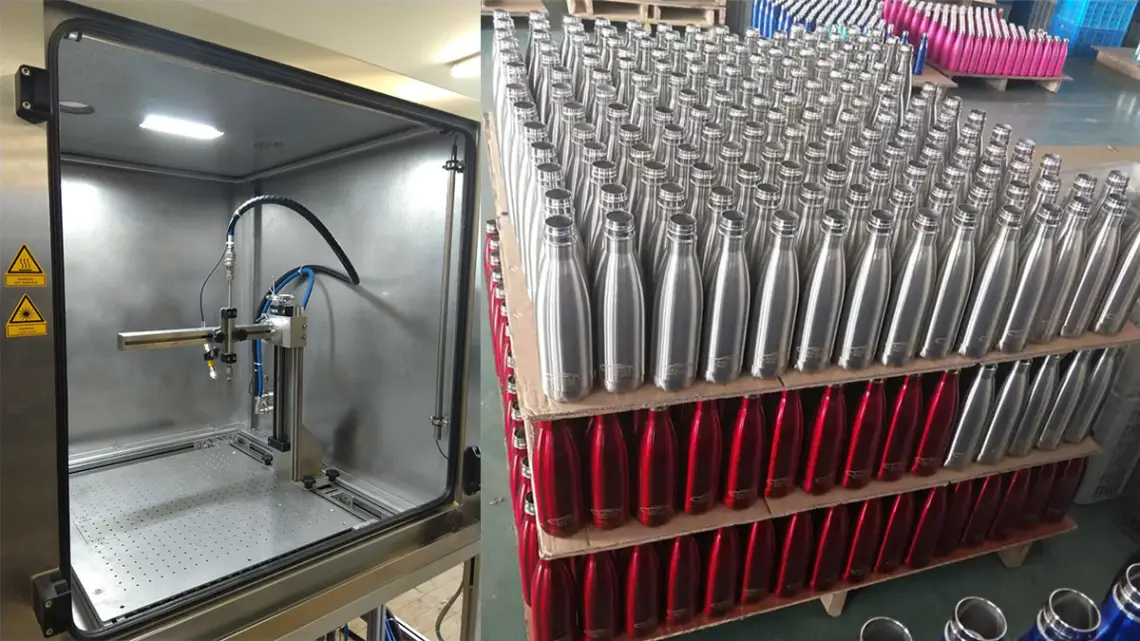
Laser engraving burns your logo into the metal. It is permanent and elegant, but it shows in one color, usually a silvery tone, and works best on stainless steel.
Screen printing applies ink in solid colors. It suits plastic and powder-coated steel and is cost-effective for larger runs. It works best for simple logos with a few colors.
Digital or full-color printing handles photos, gradients, and detailed artwork. It is a good fit for campaigns with bold designs, though costs per unit are often higher on small orders.
Pad printing works on curved or oddly shaped surfaces and is common for smaller logos.
Whichever method you choose, send your supplier a vector file if possible, such as an SVG or AI file for your logo to remain clear and crisp. Request a sample or a digital proof before approving for printing. Keep the design simple: a clear logo, one short tagline at most, and plenty of open space. Crowded bottles look cheap, and people are less likely to carry them.

Think About Sustainability Claims Carefully
Many buyers choose reusable bottles because they reduce single-use plastic. That is a fair selling point, but be careful how you word it. In the U.S., the Federal Trade Commission’s Green Guides explain how to avoid misleading environmental claims. Terms like “eco-friendly” or “recycled” should be backed by facts. If a bottle contains 50% recycled stainless steel, say so, and ask your supplier for documentation.
It also helps to remember that a reusable bottle only helps the environment if people use it often. A cheap bottle that gets thrown away after one event defeats the purpose. Quality is part of sustainability.
Budget, Quantity, and Timing
Bottle prices vary widely. Basic plastic bottles may cost a few dollars each in bulk, while insulated steel bottles with engraving usually cost more. Setup fees, color counts, and rush shipping can change the final price, so request a full quote that includes everything.
A few practical tips can save money and stress:
- Order early. Production and shipping often take two to four weeks or longer.
- Ask about price breaks. Unit costs often drop at 100, 250, and 500 pieces.
- Plan for extras. Order 5–10% more than you need to cover damage or last-minute guests.
If your budget is tight, consider fewer bottles of higher quality. A client who gets a well-made bottle is more likely to use it for years than one who receives a flimsy item at every event.
Making the Gift Count
How you give the bottle matters. Hand it over with a short, personal note. Pair it with a welcome kit, a product sample, or an event badge. Give staff a bottle on their first day so it becomes part of daily office life. For clients, consider sending it after a milestone, such as a signed contract or an anniversary.
Moreover, ensure you check your suppliers’ qualifications before purchasing the bottles. Look for suppliers with clear return policies, real customer reviews, and product safety information.
Final Thoughts
The best business logo water bottles are ones people want to use. Start with your audience and purpose, choose the appropriate material, design the clean logo, and make claims you can back up. A thoughtful bottle can keep your brand in front of clients and employees every day for years.
Mountop Bottle offers stainless steel water bottles, smart water bottles, UV water bottles, plastic sports bottles, shaker bottles and other types of water bottles. This factory also offer customization services, inclued logo printing, private label solutions, product design and development, mold creation and packaging customization.


