
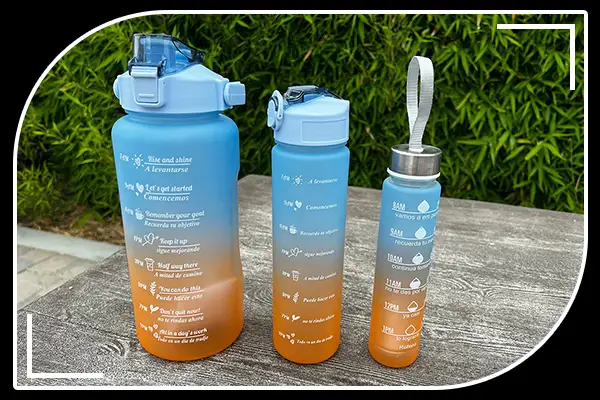
Where businesses sourcing reusable drinking glasses in bulk, BPA-free plastic water bottles make a ideal choice because of their light weight and easy to customize designs and branding options. They can be used for promotional campaigns, school programs, sports events, employee gifts, and retail products.
Choosing an appropriate bottle requires much more than looking for whether the bottle is BPA-free. The type of material, the bottle design, the lid structure, and customization requirements are other important factors.
This guide covers the main considerations for businesses purchasing BPA-free plastic water bottles in bulk, from material selection to customization and production planning.

Why Businesses Choose BPA-Free Plastic Water Bottles in Bulk
Plastic water bottles are popular for bulk orders because they are relative lightness and available in various shapes, capacities, and colors. In addition, compared to many metal drinkware options, they can also be convenient for projects when portability and unit cost are important priorities.
For promotional campaigns and trade shows, companies can order bottles with branded colors and logos to distribute to attendees. Schools, sport teams and community organizations will appreciate bottles which are relatively light and easy to carry all day long. Retailers and private labels have special requirements in terms of appearance of the products, packaging, and consistent supply.
In this regard, ordering in bulk can help businesses to standardize the products used for different purposes. Moreover, bulk purchase may also provide better unit pricing, depending on the product, customization method, and order specifications.
Most importantly, determine the purpose of the bottles before requesting quotes. A simple bottle for a one-day event may not need the same features as a reusable product designed for everyday use.
What Does BPA-Free Mean?
“BPA” is the abbreviation for bisphenol A, which is a chemical used in manufacturing certain plastics and resins. With the fear of being exposed to BPA, most consumers prefer products that are BPA-free.
It is important to note that BPA-free is a materials claim that does not mean the product complies with all safety standards. It does not mean that the bottle can withstand hot liquids, dishwasher use or any type of beverage.
Company needs to ensure the product specifications from the supplier comply with the material requirement. Different requirements can apply to different markets, products type and intended use.
In addition, evaluate the complete bottle rather than the body alone. There are other parts such as the drinking spout, straw, seals, and other components may use different materials. Buyer needs to ensure that the relevant components meet the requirements for the intended application.

Which Materials Are Used for BPA-Free Plastic Water Bottles?
Different plastics offer different combinations of appearance, durability, flexibility, and cost. The right choice depends on how the bottle will be used and the product expectations of the target customer.
| Material | Common Characteristics | Potential Applications |
|---|---|---|
| Tritan copolyester | Clear appearance, rigid construction, suitable for many reusable bottle designs | Sports bottles, promotional drinkware, retail products |
| Polypropylene (PP) | Lightweight and versatile, commonly used for bottle components and selected bottle designs | Everyday bottles, budget-conscious programs |
| High-density polyethylene (HDPE) | Generally opaque, lightweight, and suitable for practical container designs | Utility-focused bottles and selected reusable applications |
Not every material is suitable for all bottle designs and conditions of usage. Heat resistance, cleaning instructions, chemical compatibility, and expected service life should be checked against the specific product specifications.
For buyers that want a clear, rigid bottle and intend to reuse the bottle everyday, Tritan copolyester is one of the possible materials to consider. PP may suit simpler designs or particular components, while HDPE can be considered where an opaque appearance is acceptable.
Rather than choosing by material name alone, compare the finished products and their supporting documentation.
Choose the Right Bottle for Your Order
The product specifications should be determined by the targeted customers. Capacity is a reasonable place to start: small bottles are good for children or event giveaways, while large bottles would better for sports, outdoor activities, or extended daily use.
Afterwards, you can think about bottle cap and lid. There are screw cap, flip-top lid, push-and-pull spout and straw lid offer different drinking experiences. A wider opening makes it easier to fill and clean the bottle, but the lid should close well and meet the purposes of usage.
Durability is another important factor for reusable bottles. Check the materials of the bottle, cap, sealing system as well as care instructions provided by the manufacturer. If the product is intended for frequent use, buyers should pay particular attention to leakage, wear, and ease of cleaning.
Finally, there is a question of distribution of the bottle. Promotional giveaway bottle may prioritize price and simple branding. A retail product may need unique shape and colors, individual packaging and consistent appearance across production batches.
Customization Options for Bulk BPA-Free Water Bottles
Through customization, companies can convert a standard bottle into a product fits the company’s image. The choice available depends on the supplier’s existing designs, production methods, and order quantity.
Common options for customization are bottle color, capacity, lid design, carrying accessories, logo placement, and packaging. Some projects uses an existing bottle design with a printed logo on it, while others require a more custom combination of colors and components.
Logo application should be selected according to the artwork and bottle surface. Screen printing can suit relatively simple graphics, while transfer printing may accommodate more detailed or multicolored designs. The supplier should recommend a method based on the specific material and finish rather than applying the same process to every bottle.
Before approving a bulk order, review the artwork proof and, where appropriate, a physical sample. Look at the logo’s size, color, position, and appearance on the actual bottle. This is especially useful when the product needs to match an established brand color or retail packaging design.

What to Check Before Placing a Bulk Order
A competitive unit price is useful, but it is not enough. Buyers should compare quotations based on the same bottle model, material, capacity, lid, customization method, packaging, and order quantity.
Minimum order quantity (MOQ) is another thing to consider. While some suppliers are able to deliver existing models with flexible order quantities, custom colors, new tooling, and special packaging can require MOQ limitations. It is necessary to know how MOQ applies to the total order, each color, or each design.
Samples are worth considering before production begins. They allow buyers to test the product’s appearance, lid operation, leakage performance, and general usability. If a particular material or compliance claim is important to the project, request the supporting documentation.
Production and delivery schedules should also be agreed upon in advance. Custom artwork approval, manufacturing, quality inspection, packaging, and shipping all contribute to the total lead time. For an event or product launch, the delivery deadline should be clear before the purchase order is confirmed.
Finding a Reliable BPA-Free Water Bottle Supplier
An ideal supplier should be able to articulate its product specifications and offer relevant information on the materials, customizations, manufacturing process, and quality control.
Consistency in follow-up orders is just as important as the first sample. Businesses need to confirm how the supplier ensures that the consistency in the bottle color, logo placement, lid, and packaging specifications during each manufacturing cycle. It is also useful to determine what the supplier’s policy on defects handling policy.
OEM and ODM can come in handy when it is necessary to customize the colors, accessories, packaging, or product design itself. However, buyer should make sure of what options are available for the particular bottle selected and whether additional tooling or minimum quantities apply.
Mountop offers reusable drinkware and OEM/ODM customization support. Businesses evaluating plastic water bottles should confirm the available materials, product models, and customization capabilities against their specific requirements before proceeding.

Making the Right Bulk Purchasing Decision
BPA-free plastic water bottles can prove a useful choice for businesses that need lightweight and customized drinkware. The most suitable product depends on the target users, intended application, budget, material requirements, and branding goals.
Before committing to a large order, establish the product specifications, review the relevant compliance documents, approve the sample, and confirm the production and delivery arrangements. These steps help buyers evaluate suppliers on more than price alone and make it easier to maintain consistent product quality.


